TOP
Management of Processing Waste by Producing Organic Fertilizer from Coffee Husks
Management of Processing Waste by Producing Organic Fertilizer from Coffee Husks
The coffee processing journey, from fresh cherry to parchment, generates a significant amount of residual material, specifically coffee cherry husks. Without proper waste management, this byproduct can severely impact the local environment. Potential issues include foul odors disturbing nearby communities, risks to the occupational health and hygiene of residents, and wastewater contaminating natural water sources, which in turn harms aquatic ecosystems.
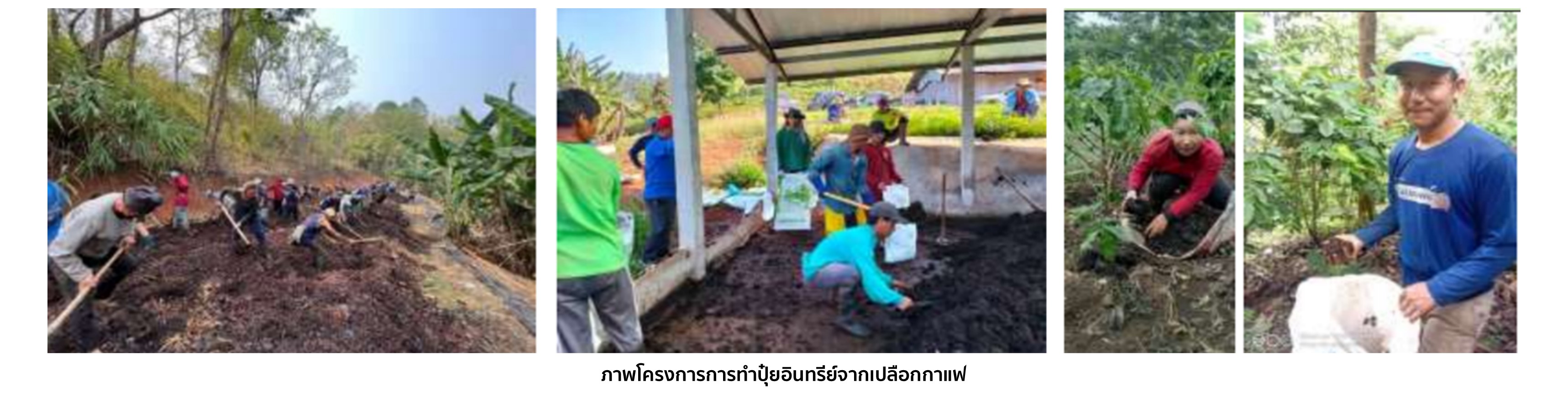
MiVana Co., Ltd. is driven by a social enterprise concept that aims to create shared, sustainable success. The company is deeply committed to reducing environmental and ecological impacts in watershed areas by implementing a circular nutrient economy. When coffee is harvested, the coffee plants draw nutrients from the soil to grow the cherries. After processing, only the coffee beans (parchment) are consumed, leaving behind the coffee husks. To manage this byproduct responsibly, MiVana's organic agriculture promotion officers work directly with farmers every year. They plan and carefully select suitable coffee husks for composting. This compost is then returned to the soil, allowing the plants to reabsorb the essential nutrients, thereby creating a balanced and sustainable nutrient cycle.
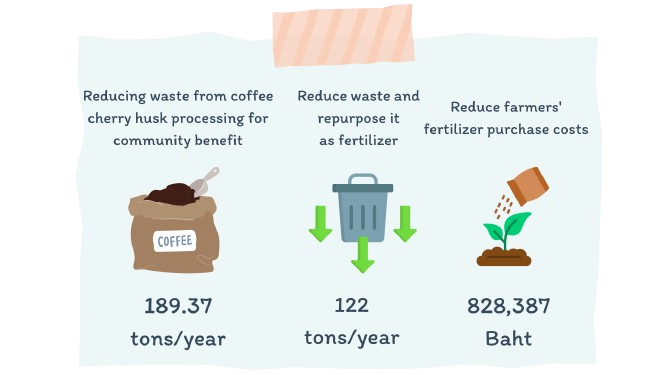
In 2024, this initiative successfully converted 189.37 tons of post-processing coffee husks into 122.0 tons of organic fertilizer. This effort significantly reduced fertilizer purchase costs for farmers by 828,387 Baht.