TOP
Management of Processing Waste by Producing Organic Fertilizer from Coffee Husks 2022
The process of transforming fresh coffee cherries into parchment coffee generates a byproduct: coffee cherry husks. Without proper management of this processing waste, it can negatively impact the local environment. This includes issues such as unpleasant odors affecting nearby communities around the processing plant, compromised occupational hygiene for local residents, and wastewater runoff into water sources, which can harm aquatic ecosystems.
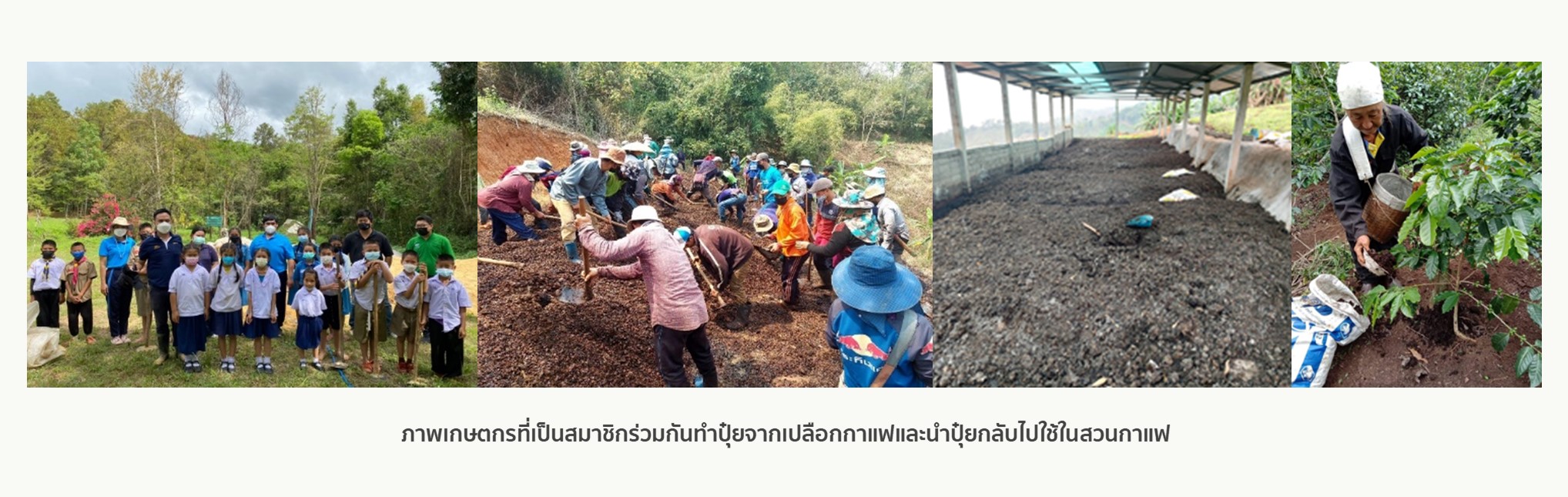
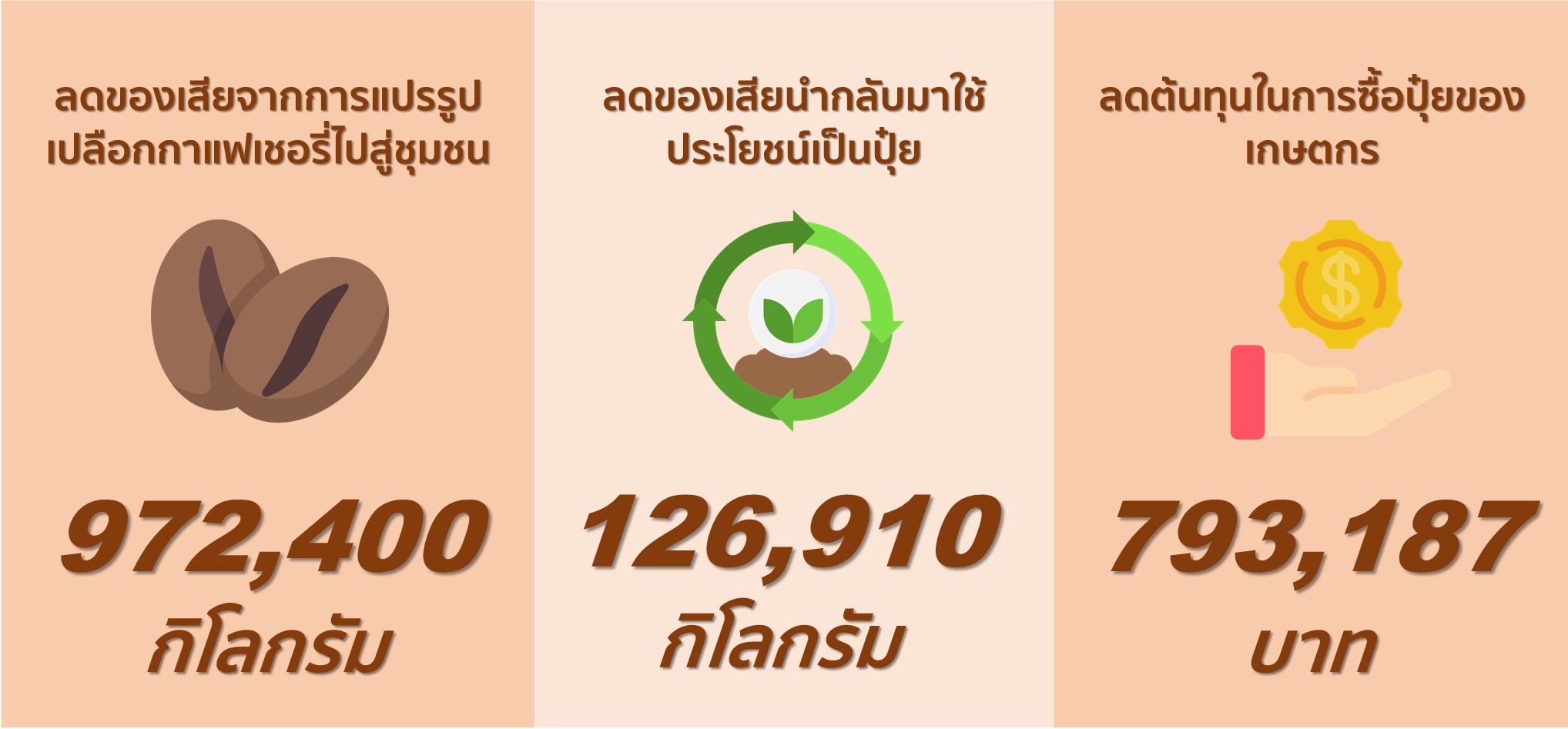
Driven by a philosophy of social enterprise and creating shared sustainable success, Meewana Company Limited is committed to minimizing the impact on the upstream ecosystem and environment. This is achieved by applying the principle of nutrient cycling. Coffee cherries, formed as coffee plants absorb nutrients from the soil to nourish the fruit, are harvested from the farms. Only the coffee beans (in parchment) are used for consumption, leaving behind the coffee husks. Each year, the company deploys organic agriculture extension officers to work with farmers in planning and preparing to select suitable coffee husks for composting. This compost is then returned to the soil, allowing plants to reabsorb the nutrients, thus completing a balanced nutrient cycle. In 2022, 972,400 kg of residual coffee husks were recycled into 126,910 kg of organic fertilizer, enabling farmers to reduce their fertilizer purchase costs by 793,187 baht.