TOP
Bio-Extract from Fish Scraps to Reduce Household Expenses Project
Premier Canning Industry Co., Ltd., a subsidiary, has adopted a social responsibility policy to guide its annual corporate strategy. The company considers various projects based on the analysis of stakeholders within a 5-kilometer radius of its operational area, following the Department of Industrial Works' CSR-DIW Continuous approach. With the local community and its environment as primary stakeholders, the company has enhanced and expanded its collaboration with the community to implement the "Bio-Extract from Fish Scraps for Community and Environmental Well-being" project. Employees of Premier Canning Industry Co., Ltd. possess the knowledge to produce bio-extract from fish scraps, which are byproducts of the production process.
• Sustainability Concepts
The core idea is to sustainably expand and maximize the beneficial use of resources for the community, society, and the environment. This is achieved by taking the fish heads, skin, bones, and intestines – byproducts from our production – to educate and teach the community how to make bio-extract. We also demonstrate how to use this fish-based bio-extract as a substitute for chemical fertilizers. This leads to improved health safety, reduced household agricultural costs, and the ability to use or sell their produce to lower living expenses. The aim is for community members to apply and further develop this knowledge at home and within the community for long-term sustainability.
• Guidelines and Results
1. Consider the selection of communities located within a 5-kilometer radius of the factory, with a working group of employee representatives conducting community surveys and making the selection.
2. Hold dialogues with the communities to develop projects.
3. Provide knowledge and instruction on how to make bio-extract from fish heads, skin, bones, and intestines.
4. Utilize the bio-extract produced from fish scraps as a substitute for chemical fertilizers.
• Operational objectives
1. Produce a demonstration video clip showing how to make bio-extract from tuna scraps and how to use it as a substitute for chemical fertilizers when growing household vegetables for the residents of the Bang Bo Police Flat community (1 piece of content).
2. Donate at least 40 liters of bio-extract made from tuna scraps to the community members for trial use.
3. Ensure participation from at least 12 households within the community in the project's activities.
• Results compared to targets
1. At least 12 households in the Bang Bo Police Flat community have gained knowledge in making bio-extract from fish heads, skin, bones, and intestines.
2. By using the bio-extract produced from fish scraps as a substitute for chemical fertilizers in their household agriculture, and subsequently using or selling the produce, participating families have been able to reduce their living expenses by more than 500 baht per month.
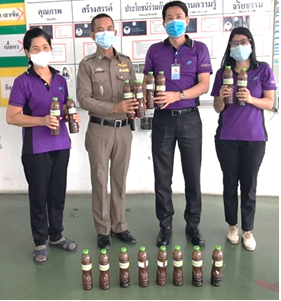
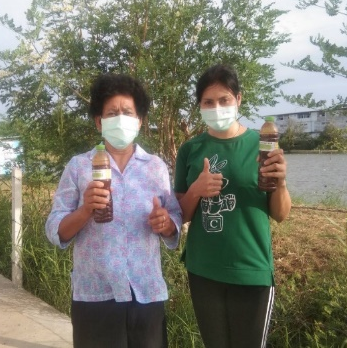
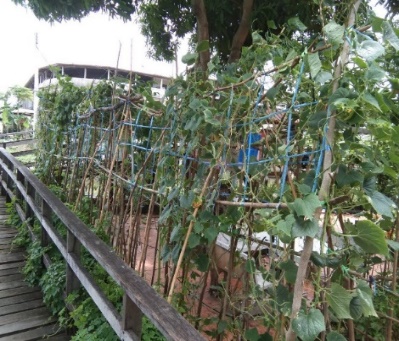
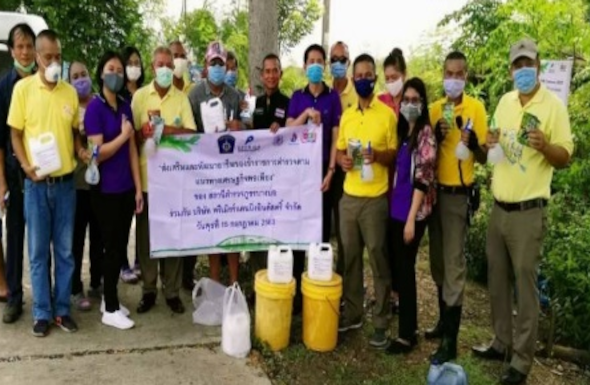
Pictures of activities in the "Bio-Extract from Fish Scraps to Reduce Household Expenses Project"